 IQCertainty
Example scenario · Auto repair
AI for auto shops: quieter phones, faster approvals, more return visits
The phone never stops, approvals hold up the bays, and customers don't come back for the work they declined. Here's how an independent auto shop could use AI to keep cars moving, shown as an example scenario.
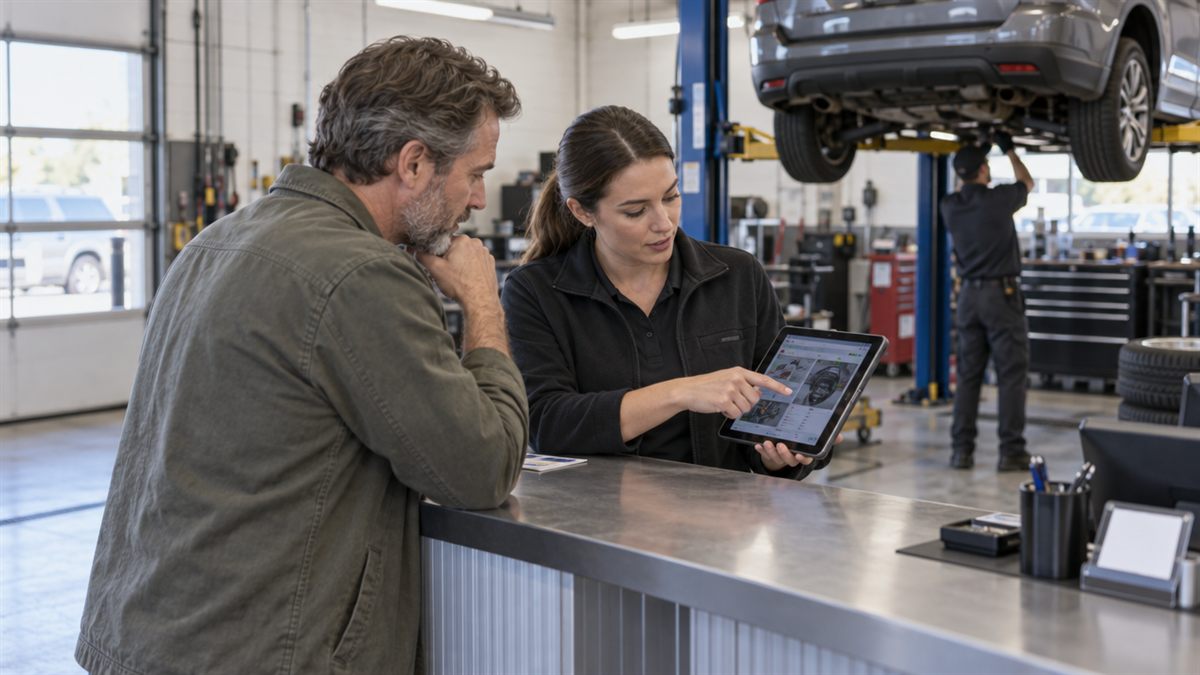
Where the hours go
The everyday problems owners tell us about
The phone never stops
Status checks, price questions and approvals keep the advisor on the phone all day.
Approvals hold up the bays
Waiting for a customer to call back means a car sits on a lift.
Declined work is forgotten
Customers who said 'not today' rarely hear from you again.
Scheduling and bays are chaotic
Drop-offs, waiters and parts delays reshuffle the day.
New advisors need coaching
Explaining repairs clearly and honestly takes practice.
A day in the life
Keep cars moving and customers coming back
Independent shops win on trust. I build tools that build it automatically: status updates by text, repair approvals with inspection photos, reminders for maintenance and declined work, and a schedule that keeps bays full.
Advisors learn to explain repairs clearly with short training lessons, and you see car count, average ticket and tech efficiency every morning.
- Automatic status texts to every customer
- Approvals by text with inspection photos
- Friendly reminders for maintenance and declined work
Checked in2
Awaiting approval1
In progress1
Follow-up2
Example scenario
A typical week, before and after
Before
- Advisor on the phone all day
- Cars wait on lifts for approvals
- Declined work forgotten
- Numbers checked at month-end
After
- Automatic status texts
- Approvals by text with photos
- Reminders bring customers back
- Car count and average ticket every morning
This is an illustrative scenario, not a client result. Your results depend on your business.
What I'd build
Tools shaped around how you already work
Status updates and approvals by text
Customers stay informed and approve repairs with photos.
Maintenance and declined-work reminders
Friendly reminders that bring customers back.
Scheduling and bays
A day that fits drop-offs, waiters and parts delays.
Advisor training
Short lessons on explaining repairs clearly and honestly.
Concept mockups
What it could look like on your phone and screen
These are concept mockups drawn for this page, not screenshots of a real business. Names and numbers in them are placeholders.
Your first 30 days
From first conversation to working tools
Week 1 · Listen
A free assessment, then a working session at your business or by video. I map how the work actually flows today and where the hours go.
Week 2 · Plan
A short written plan in plain English: what to build first, what it costs, and the result we're aiming for. No surprises later.
Weeks 3–4 · Build
I build and connect the first tools, test them with your real work, and adjust until they fit how your team already operates.
Day 30 · Launch and train
Your team learns it in a short hands-on session. I stay on call while it settles in, and we measure the results we agreed on.
Common questions
What owners usually ask
Will it work with my shop management system?
I connect your system wherever it allows, and build the texting and reminders around it.
Won't automatic texts annoy customers?
Messages are short, useful and sent only at key moments, and customers can opt out anytime.
Can it help us get more reviews?
Yes. A friendly review request after a good visit is one of the easiest wins.
Why work with me
I'm a real person, I've run businesses, and I don't win unless you win.
I start by listening to how your business runs today, then recommend only what will actually help. Your information stays confidential, and we can sign a mutual NDA before we look at anything sensitive.